Innovations in Drone Security
The convergence of artificial intelligence (AI), edge computing, and next-generation wireless networks is revolutionizing the way autonomous systems operate in mission-critical environments. Drone-based delivery systems have emerged as a vital component of smart healthcare logistics, enabling rapid transport of medical supplies, especially in geographically dispersed or inaccessible regions. However, the increasing reliance on autonomous drones introduces new security challenges, particularly in safeguarding data transmission.
Reaching Toward the Metaverse
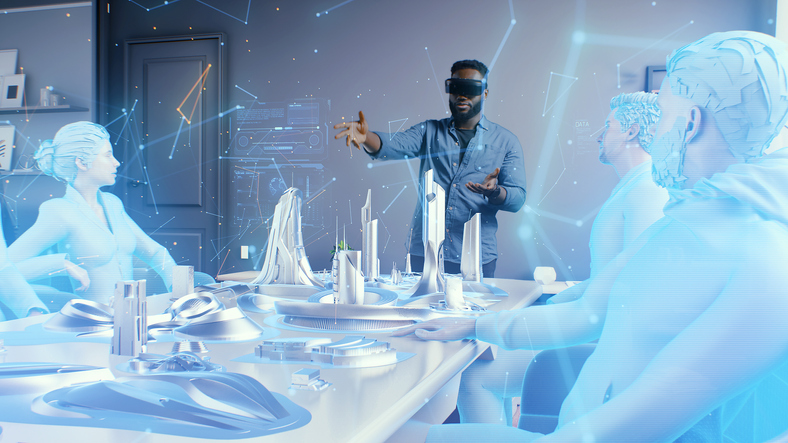
The advent of the Metaverse concept has expedited the evolution of haptic, tactile internet, and multimedia applications with their VR/AR/XR services. Fully immersive sensing is likely to define the next generation of wireless networks as a key to realizing the vision of the Metaverse. The potential economic impact of the Metaverse is significant, with the total market projected to reach between US$8-13 trillion by 2030. Furthermore, Gartner predicts that 25% of people will spend at least one hour daily on the Metaverse platform for personal and professional purposes.
Improving the Metaverse
Forming the next evolution of the Internet—the Metaverse is the concept of a fully immersive and universal virtual space for multi-user interaction, collaboration, and socializing. This concept of a blended shared space, whereby users can interact with each other in physical/virtual environments and extended reality (XR) in a seamless, immersive, and interactive way, has drawn enormous attention in both industry and academia.
Establishing a Framework for Multimedia Semantic Communications
As the global demand for mobile communication services increases and new application scenarios arise, higher-level requirements for mobile communication capabilities will drive the development of the sixth generation (6G) of the mobile communication system.
Can the Internet of Things Make the Metaverse More Real?
Research suggests the IoT will enable us to overcome one of the greatest challenges we face in the Metaverse—how to map data from real life, in real time, into a digital reality.
How Mobile Edge Networks Can Enhance Augmented Reality
The most promising method of unlocking the full potential of our connected future is cellular IoT: using fifth-generation (5G) and beyond 5G (B5G) wireless networks to enable massive machine-type communication (mMTC).
Augmented Reality Could Transform Human-Robot Collaboration
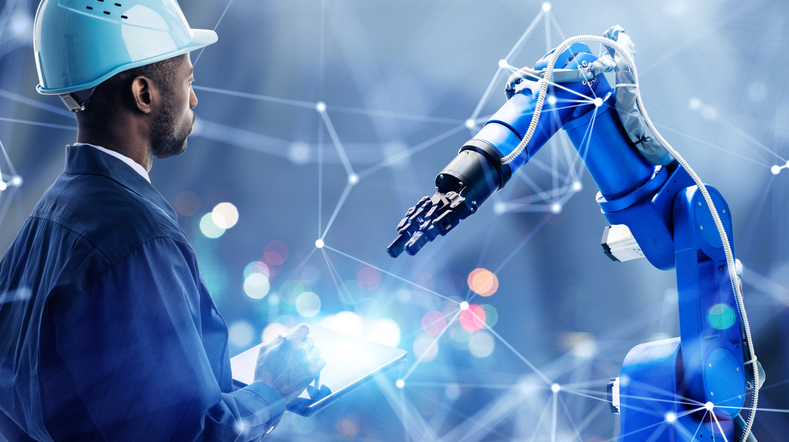
Human-robot collaboration will soon be a part of our daily lives. As industries face increased demands, reserachers have created a method to give robots more autonomy with augmented reality.
Fueling the Fourth Industrial Revolution
The Fourth Industrial Revolution is upon us, and IEEE is leading the way. Learn more about key technologies that will change the way we live in this new era and how IEEE research is fostering innovation and education in these fields.