The IEEE Xplore Innovation Spotlight features articles on cutting-edge topics handpicked from the IEEE Xplore Digital Library of more than 7 million technical documents.
Falls are a common and high-risk event among older adults and individuals with mobility impairments. As one of the leading causes of injury and mortality in elderly populations, timely detection of falls is critical for improving quality of life and reducing long-term healthcare burdens. In recent years, there has been growing interest in developing wearable fall detection systems that offer high accuracy, low latency, and long-term usability in daily environments.
In the field of mental health, stress plays a significant role in many conditions, including anxiety, depression, and burnout. That’s why the ability to monitor stress in real time is highly desired as a way to take preventative action. Wearable technology is one possible way to tackle the issue since it can continuously collect passive data on physiological biomarkers that can be used to identify stress as it occurs.
Breast cancer represents 12.5% of all newly diagnosed cancer cases globally, establishing it as the most prevalent form of cancer worldwide. It accounts for around 30% of all newly diagnosed female cancers in the United States.
There are over 250 million people worldwide who have severe visual impairment, with 70 million entirely visually impaired (VI). VI individuals face several challenges when shopping, including: finding the right direction to desired commodities, distinguishing between similar-looking items, and not wanting to ask for help. More research is needed to provide user-friendly and practical assistance for VI individuals in complex environments, such as supermarkets.
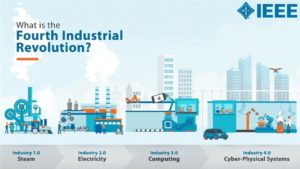
Fueling the Fourth Industrial Revolution
The Fourth Industrial Revolution is upon us, and IEEE is leading the way. Learn more about key technologies that will change the way we live in this new era and how IEEE research is fostering innovation and education in these fields.